
Machine vision system enables fast and accurate container identification in Vuosaari
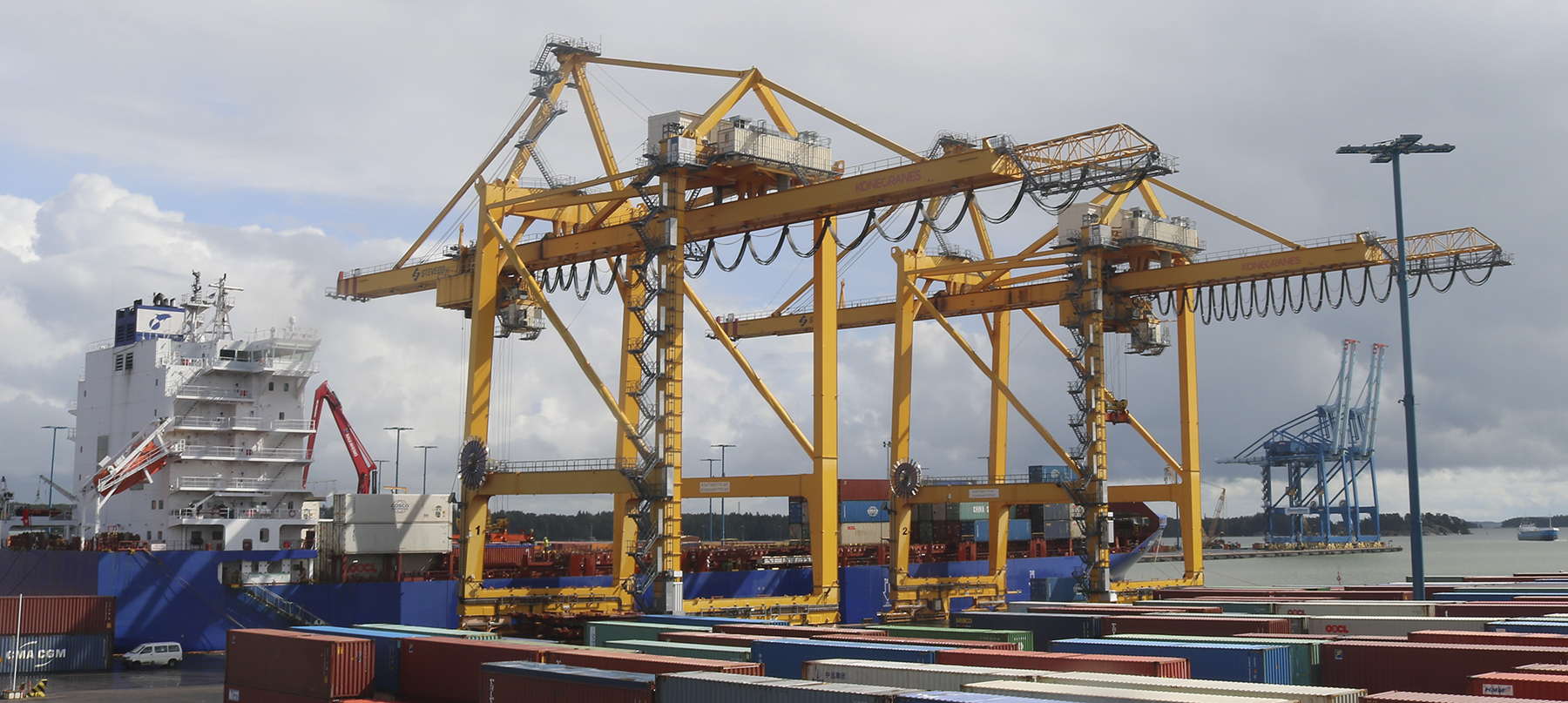
Container handling at the Port of Vuosaari has been streamlined with an innovative camera-based hoisting system. The system, which uses machine vision, brings a whole new level of efficiency to container unloading and loading,” says Tapani Tolonen, Head of Steveco’s container terminal operations in Kotka and Helsinki.
In practice, this means that 16 cameras have been installed on each of the cranes at the Port of Vuosaari to scan containers and compare the data obtained with the corresponding information in Steveco’s operations control system in real time.
“This will reveal any deviations and the system will correct them at the same time,” explains Tolonen, who is responsible for integrating the new system into Steveco’s operations in Vuosaari.
Cameras are installed both on the crane structures and the spreader. The cameras quickly capture key information from containers, such as the container number and size. The cameras do not transmit any live images, but their task is automatic hoisting, i.e., cargo data processing.
“For example, when loading a ship, the system uses the loading plan as its starting point and finds a place on the ship for the container. The system tells the crane operator where to lift the container.”
Automation handles hoisting quickly
Previously, hoisting was done manually, but thanks to machine vision and advanced automation, those pairs of hands are now free for other tasks.
“Once hoisting crews are no longer required, the staff freed from those duties can operate machinery, for example. This is a good example of using automation in a smart way,” says Tolonen.
Behind the machine vision system is Visy Oy, an IT company based in Tampere, which specialises in various software applications based on machine vision and access control systems for industrial and port sites.
Tolonen points out that ports face constantly changing needs, such as responding to fluctuations in traffic volumes and tightening safety regulations. Machine vision solutions improve the flow of logistics processes by providing an IT solution for operational development.
“Machine vision is already in use in ports such as Rotterdam, Gdansk and Gothenburg in Europe,” explains Tolonen, adding that these ports were among the benchmarks when planning the investment.
A project a long time in the making
Tolonen sees machine vision systems as part of the digitalisation and automation development of modern ports. This is why Steveco had already discussed camera systems for hoisting some years ago – until the time was finally ripe for introducing the new technology.
“Machine vision is well-suited to container operations, as the system utilises deep learning, which allows it to detect and identify even the smallest details of the containers.”
In the autumn, Visy’s experts, Steveco’s IT staff and installation subcontractors joined forces and built a machine vision system in Vuosaari. Tolonen, interviewed in October, says that the brand-new system has already proven its functionality:
“Especially considering that we are now introducing completely new technology to cranes, everything has gone surprisingly well. We get exactly the level of efficiency we were aiming for,” he says.
Development work continues alongside operations
The system is not yet fully complete, and development will continue throughout October – ultimately until the system functions as perfectly as possible. “The final adjustments will be made during everyday use,” Tolonen explains.
Tolonen admits that the launch of the new system has not been without teething problems and minor bugs. For example, when the development team changes a certain parameter in the system, the impact in the field may briefly be negative.
“In this case, the employees who are loading the ship notice that the power or the usability of the system is decreasing, but the effect is temporary and disappears over time,” says Tolonen, thanking all Vuosaari workers for their patience in the same breath.
“Our team deserves a big thank-you for their patience and understanding with the development work.”
Mussalo is next
The lessons learned from Vuosaari will be fully implemented in Mussalo, Kotka, where an even wider range of cranes equipped with cameras is expected.
“In the port of Mussalo, the machine vision system will be installed on all but one of the port’s five cranes.” The crane that will be without cameras is the old-timer in the group, and is no longer worth integrating with cutting-edge technology.
A similar evolution is expected in Kotka as in Vuosaari: first a two to four-week trial period, followed by production.
“We will also collect user experiences there and optimise the system at the same time.”
Technology provides competitive advantage
Tolonen considers the machine vision investments in Vuosaari and Mussalo to be an important strategic move that will help the ports to develop and further improve their services. According to him, different technologies are now developing at such a rapid pace that all major investments must be carefully thought out – and implemented in a timely manner.
“Even in Finnish ports, it is sensible – and very possible – to utilise technology and automation in new ways,” he says.
“We want to retain our most important resource, which is our skilled personnel. However, we also want to introduce new tools that give us a long-term competitive advantage.”
Text: Sami Anteroinen, photo: Tuure Äikäs
About Author

Satama
SATAMA is our customer magazine. it is published twice a year in Finnish.